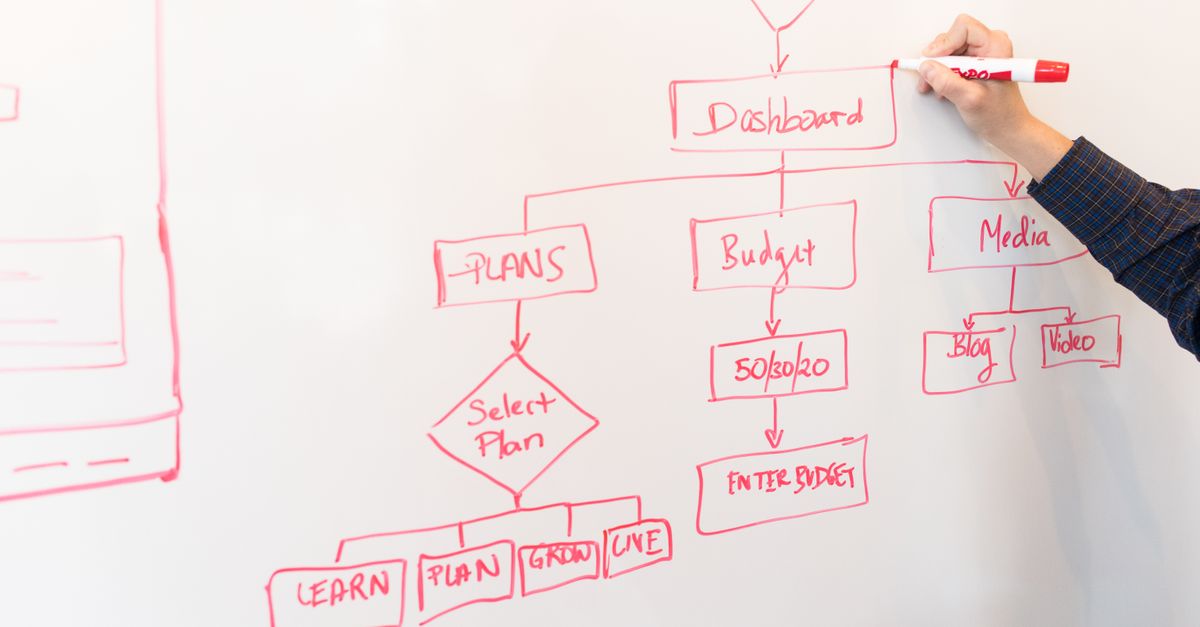
Most automation programs stall for the same reason: the organization buys one layer of the stack and expects it to behave like all three. A team licenses robotic process automation, builds forty bots, and discovers within eighteen months that half of them are broken because a vendor portal changed its layout. Another team deploys a document AI model with excellent extraction accuracy and then realizes nothing downstream knows what to do with the extracted data. A third builds an elegant workflow engine that routes approvals perfectly but still depends on someone typing values into a legacy system by hand.
Intelligent automation is the term for the combination — robotic process automation for mechanical execution, artificial intelligence for judgment and unstructured input, and business process automation for orchestration and state. None of the three is sufficient alone. Each covers a specific weakness in the others, and the value of the combined system is considerably higher than the sum of what each layer delivers independently.
Understanding how the layers stack, which problems belong to which layer, and what maturity actually looks like is the difference between an automation program that compounds and one that quietly accumulates technical debt until someone cancels it.
The Three Layers and What Each One Actually Does
RPA: the hands
Robotic process automation operates at the interface level. A bot logs into an application the same way a person would, clicks through screens, copies values, and pastes them elsewhere. It has no understanding of what it is doing. It follows a recorded or scripted sequence.
This makes RPA extraordinarily useful for one specific problem: systems that have no API and will not get one. Legacy ERP terminals, government filing portals, bank interfaces, insurance carrier sites, and internal tools built in 2009 by someone who left in 2012. RPA is the integration layer of last resort, and in most enterprises there are more last-resort integrations than anyone wants to admit.
It also makes RPA brittle. A bot that depends on a button being in a particular position breaks when the button moves. Organizations that build their entire automation strategy on RPA end up with a maintenance burden that grows linearly with the number of bots and the pace of change in the underlying applications.
AI: the judgment
The AI layer handles everything that cannot be reduced to a deterministic rule. Reading a supplier invoice that arrives as a scanned PDF in a format no one has seen before. Deciding whether an incoming email is a purchase order, a dispute, or a marketing message. Classifying a support ticket. Detecting that a transaction pattern looks anomalous relative to twelve months of history. Extracting contractual obligations from a fifty-page agreement.
These are perception and classification problems, and until recently they were handled by humans because rules-based systems handled them badly. The modern AI layer covers three broad capability classes: document understanding, natural language processing, and predictive or anomaly-detection models. What they share is that they turn ambiguous input into structured output that the rest of the stack can act on.
The critical design point is that AI output carries a confidence level. A well-built automation treats a 99% confidence extraction differently from a 71% one — the first flows straight through, the second routes to a reviewer. Systems that ignore confidence and treat every model output as fact are the ones that generate the horror stories.
BPA: the nervous system
Business process automation is the orchestration layer. It holds the process definition, tracks the state of every in-flight item, routes work to the right person or system, enforces sequencing and timing, escalates when things stall, and produces the audit trail.
BPA is the least glamorous of the three layers and by a wide margin the most important. It is what turns a collection of isolated automations into a process. Without it, an organization has bots and models but no coherent picture of where any given item is, who is waiting on what, or why a given decision was made. Comprehensive business process automation is what makes the other two layers auditable and therefore usable in regulated environments.
How the Layers Compose in Practice
Consider a supplier invoice arriving in a shared mailbox.
The AI layer reads the message, determines it is an invoice, extracts the supplier, invoice number, line items, tax, and total, and assigns a confidence score to each field. The BPA layer creates a process instance, checks the extracted supplier against the vendor master, matches line items to an open purchase order, and applies the routing rules — under a threshold with a clean three-way match, no human approval required; over the threshold or with a quantity variance, route to the cost center owner with an SLA. The RPA layer posts the approved invoice into an ERP that has no usable API, retrieves the confirmation number, and hands it back to BPA to close the instance.
Three layers, one process, and each doing the thing it is actually good at. The same decomposition applies across domains. The mechanics of this specific flow are covered in depth in the guide to accounts payable automation, but the pattern generalizes: perceive, decide, execute, record.
What goes wrong is when a layer is asked to do another's job. RPA used for decision logic produces unmaintainable scripts full of nested conditionals. AI used for orchestration produces systems with no state and no audit trail. BPA used for integration produces a workflow engine with a dozen bespoke connectors that no one can upgrade.
A Maturity Model That Reflects Reality
Vendor maturity models tend to be five neat stages ending in "autonomous enterprise." The useful version is less tidy and describes what organizations actually pass through.
Stage 1 — Task automation. Individual tasks are automated in isolation. A macro here, a bot there, a scheduled report. Value is real but local, and nothing is measured. Most organizations have been here for years without labeling it as automation.
Stage 2 — Process automation. An end-to-end process is modeled and orchestrated. State is tracked. There is a definition of what "done" means and a report showing cycle time. This is the first stage where automation produces management information rather than just labor savings. Common first candidates are expense approval, onboarding, and time-off — the same processes covered in the HR automation guide.
Stage 3 — Intelligent processing. AI enters the flow. Documents are read rather than keyed. Classification and routing decisions are made by models with confidence thresholds and human-in-the-loop fallback. Straight-through processing rates become the headline metric, and exception handling becomes a designed capability rather than an afterthought.
Stage 4 — Connected operations. Automations stop being per-department. The invoice process talks to the procurement process, which talks to the budget process. Data flows without re-keying between finance, HR, and operations. This is the stage where the compounding starts, and it is also where most programs get stuck, because it requires organizational agreement rather than technology.
Stage 5 — Adaptive automation. The system uses its own operating data to improve. Exception patterns feed back into upstream process design. Models retrain on reviewer corrections. Routing rules adjust based on measured approver response times. Very few organizations operate here across the board; many operate here in one or two processes.
Progress is not uniform. A finance function can sit at stage 4 while HR is at stage 2 and legal is at stage 1. That is normal and not a problem, provided the organization is honest about it when planning.
The Failure Modes Worth Naming
Automating the process you have. The most expensive mistake is encoding a bad process into software. A seven-step approval chain that exists because of a control failure in 2014 does not become good because it now runs automatically. It becomes permanent. Redesign first, automate second.
No exception strategy. Every automated process produces exceptions. If there is no designed path for them, they accumulate in a mailbox or a queue that nobody owns, and within a quarter the manual workaround is bigger than the process it replaced. Target a specific straight-through rate, design for the remainder explicitly, and measure the exception backlog as a first-class metric.
Measuring bots instead of outcomes. "We have deployed 180 bots" is not a result. Cycle time, cost per transaction, error rate, straight-through rate, and rework hours are results. Programs that report on activity rather than outcome lose funding at the first budget review.
Ignoring the audit trail. In any process touching payroll, tax, or regulated records, an automation that cannot explain who or what approved a decision is a liability. Immutable logs, versioned rules, and reproducible decision paths are not optional, which is why automation and HR compliance record-keeping have to be designed together rather than sequentially.
Treating it as an IT project. The people who know where a process actually breaks are the people who run it. Programs owned exclusively by IT automate the documented process rather than the real one, and the gap between the two is where all the exceptions live.
Where to Begin
The practical entry point is a single high-volume process with clear rules, a measurable cycle time, and an owner who wants it fixed. Model it end to end in the BPA layer first, even if every step is still manual — this alone produces the baseline data that every subsequent decision depends on. Then insert AI where unstructured input enters the process, and RPA only where a system genuinely offers no other integration path.
The organizations that get the most from intelligent automation are rarely the ones with the most sophisticated technology. They are the ones that were disciplined about which layer solves which problem, honest about their maturity, and willing to fix the process before automating it. If you are mapping a first candidate process and want a second opinion on how the layers should be arranged, our team is happy to walk through it with you.